Inside a Modern 1960s Kitchen

Inside a modern 1960s kitchen blog image

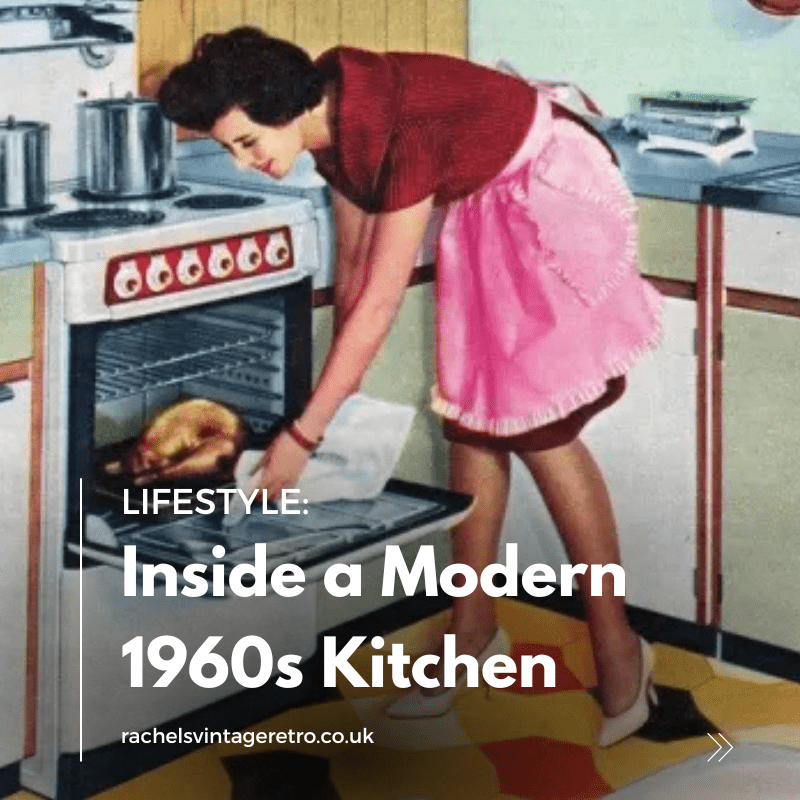
Imagine stepping into a modern kitchen in the mid-1960s. The surfaces gleam with wipe-clean Formica, cupboards are bright with colour, and new electric appliances promise to make everyday life easier. On the worktop sit matching storage jars, while patterned pottery fills the cupboards. It is all practical, cheerful and new.

The kitchen of the 1960s came on the coat-tails of post-war optimism. A brighter domestic future now seemed achievable, and after the innovations of the 1950s people were becoming used to modernity in everyday life. The kitchen was one of the main places this transformation played out, particularly for women. New fitted kitchens were on the market, replacing stand alone units and appliances. Although it wasn’t a clean break with the past as some older elements still remained. Not everyone could afford to upgrade their whole kitchen just yet. New units with their shiny formica surfaces, could well feature alongside the humble kitchenette and older appliances.

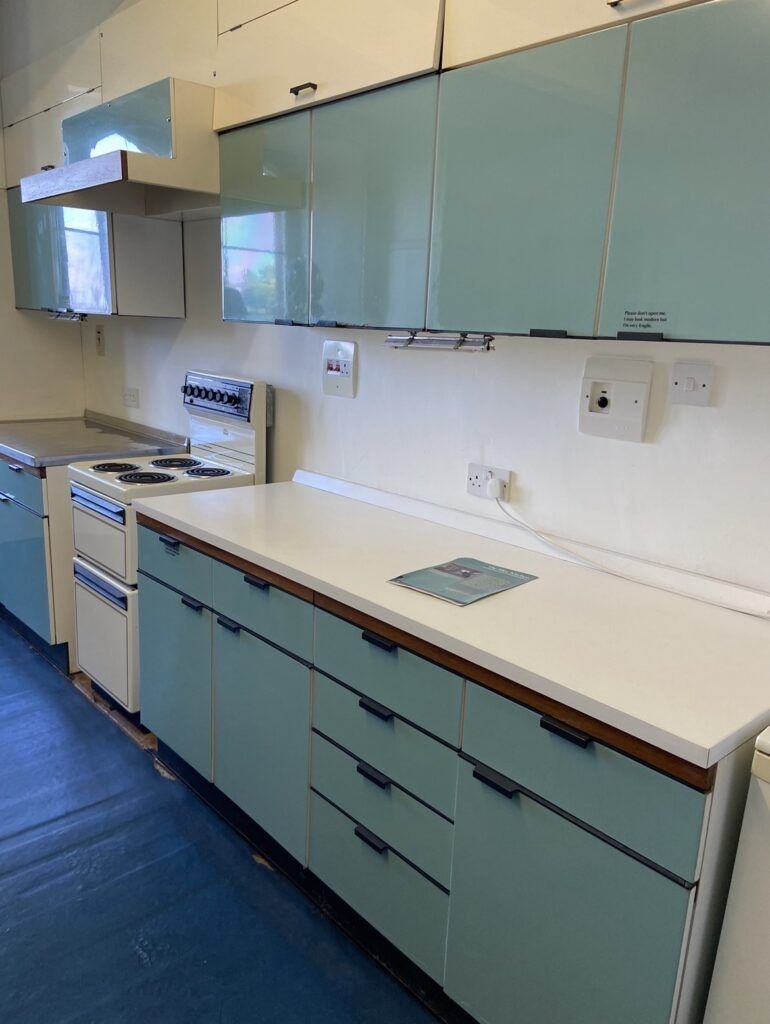
Inside a Modern 1960s Kitchen - Hygena Units
A Hygena Fitted Kitchen of the 1960s, with Clean Blue Formica Doors

As more women began to work outside the home, the modern 1960s kitchen needed to be efficient as well as functional. Instead of traditional larders there were electric fridges, keeping food fresher for longer and reducing the need for daily shopping. Many included small freezer compartments, and new frozen foods such as peas and fish fingers meant meals could be prepared quickly.

Food preparation was speeded up by appliances such as the Kenwood Chef and electric toasters. Standalone cookers were updated in clean white finishes with eye-level grills, while washing day became easier with the arrival of automatic Hotpoint washing machines.

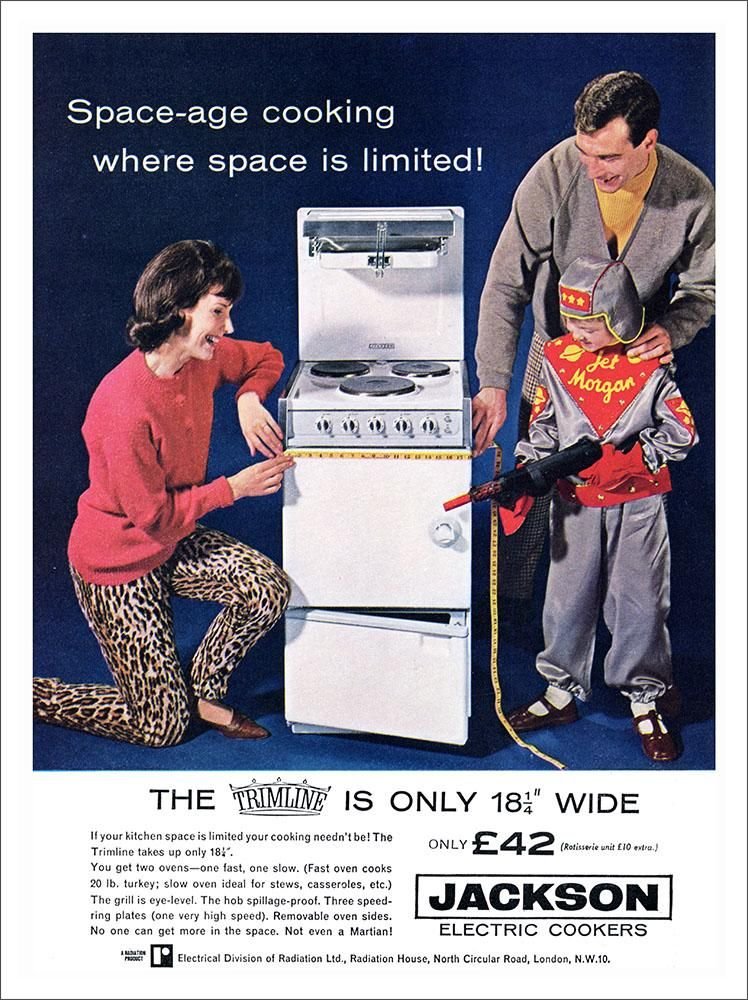
Inside a Modern 1960s Kitchen - Electric Cooker
New Electric Cooker Ad from the 1960s - Image credit retrocards.co.uk

As well as kitchen units in cheerful shades of blue or yellow Formica, tables and chairs often came in similar colours with wipe-clean plastic surfaces. Everything was designed to be practical and easy to maintain.

Another major change was the introduction of colour and there was plenty of it. Walls were decorated with bright geometric wallpaper, floors covered with vinyl, and kitchenwares often matched the overall colour scheme.

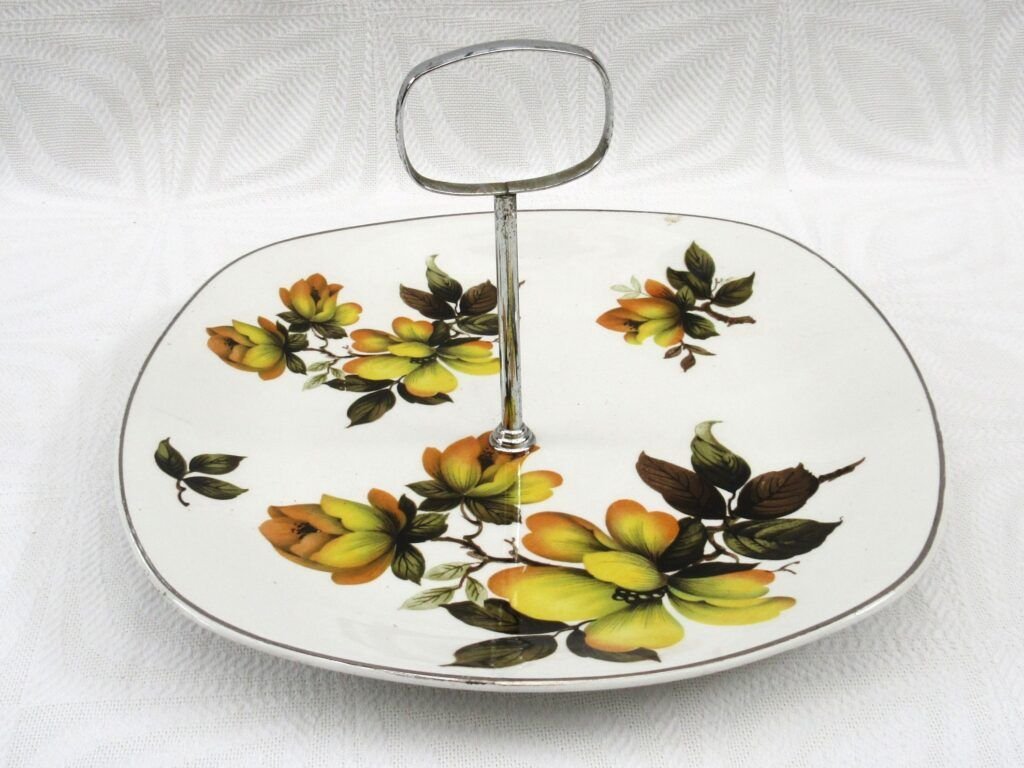
Vintage Midwinter Stylecraft Magnolia Cake Plate Stand Fashion Shape 50s 60s Image
Midwinter Cake Stand in New Fashion Shape

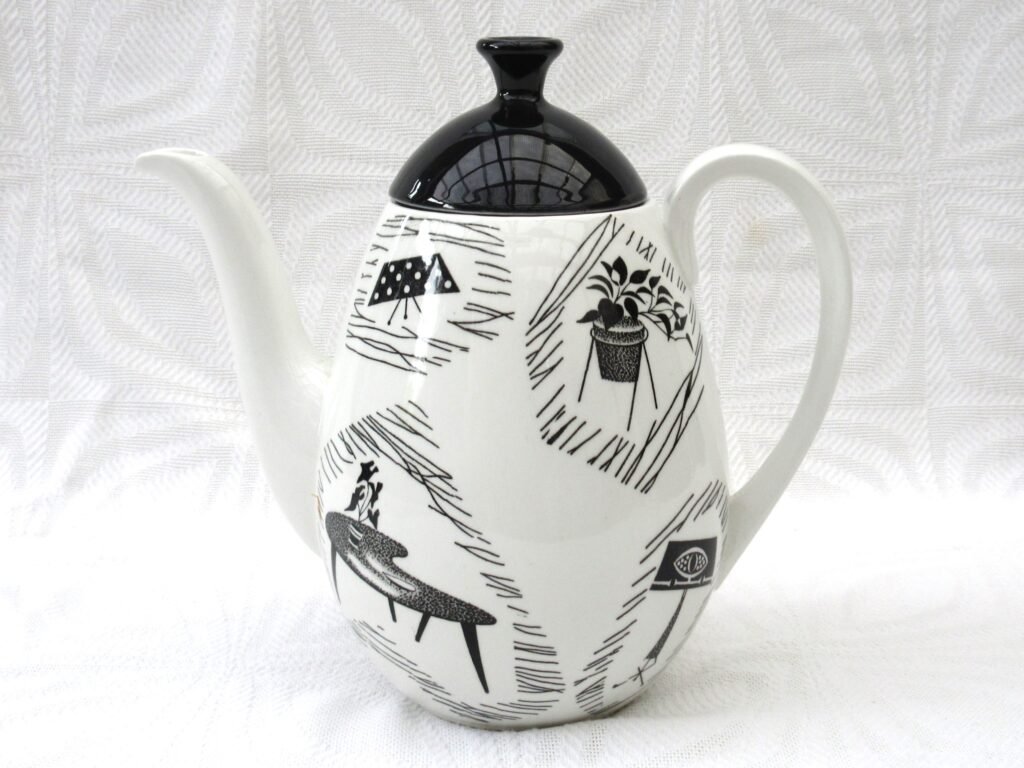
Manufacturers across Britain responded quickly to the new modern style. Pottery companies such as Midwinter, J & G Meakin and Hornsea produced dinner services with bold and colourful motifs by young designers including Jessie Tait and John Clappison. Midwinter’s new ‘Fashion Shape’ captured the curved lines of the early 1960s, along with Hornsea. They produced cruet sets and tableware in pastel shades and brighter colours with cheerful patterns such as polka dots and stripes. Black and white was also a popular colour scheme, such as that used in Ridgway Pottery’s ever popular Homemaker range. Colourful ‘flower power’ designs appeared in the late 1960s in response to new hippie peace-loving motifs and fashion styles.

Vintage Ridgway Homemaker Metro Coffee Pot Woolworths MCM 50s 60s
Ridgway Pottery Homemaker Coffee Pot

Additional influences were geometric patterns or stylised folk motifs, while others reflected contemporary influences such as Scandinavian design, interest in Eastern cultures, or the Space Race. Later in the decade, more functional shapes became popular, with straight sides and stackable forms that were practical as well as modern.

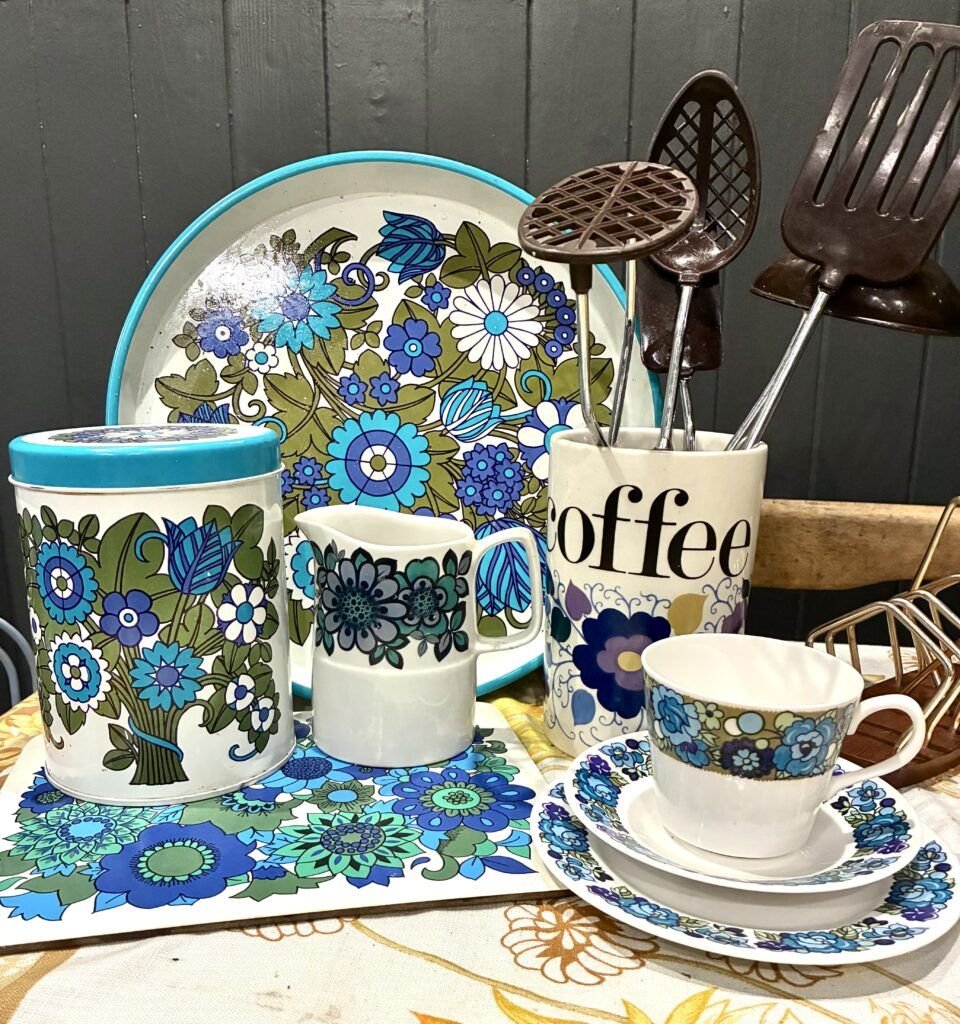
Inside A Modern 1960s Kitchen - Flower Power Pottery
Blue Flower Power Kitchenalia from the late 1960s

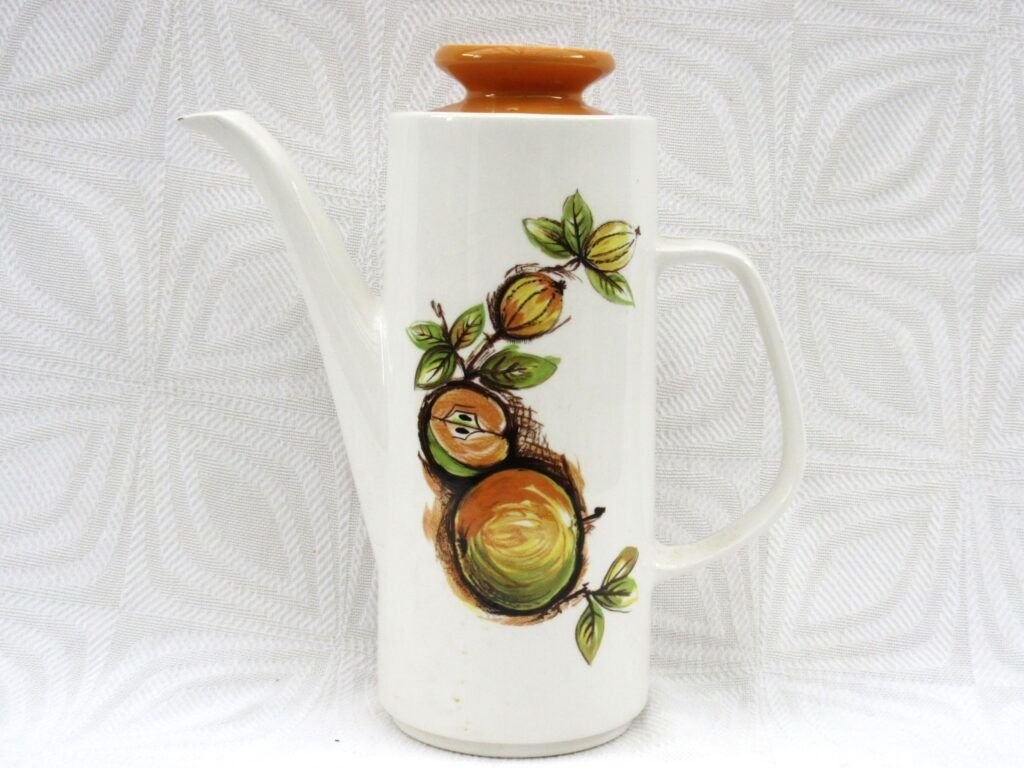
Coffee sets became a fashionable new addition to the kitchen. J&G Meakin were particularly well known for their tall coffee pots with elongated spouts and distinctive handles. Coffee mornings became an important social ritual, and a stylish coffee set was often a centrepiece of the modern kitchen.

Vintage J&G Meakin Studio Eden Coffee Pot 70s Fruit Yellow Green Image
J&G Meakin Elongated Coffee Pot in ‘Eden’ Design

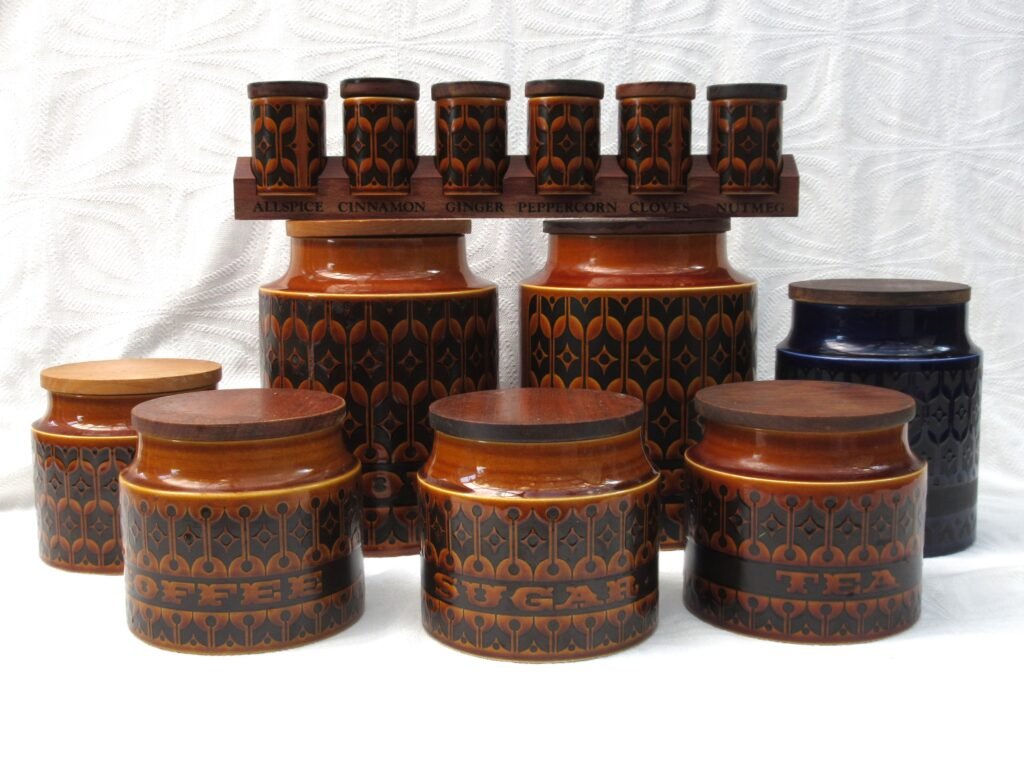
Matching storage jars were another essential feature. It was fashionable to keep them on display, usually arranged by size and labelled tea, coffee, sugar and biscuits or flour. Some had wooden lids while others used ceramic lids with rubber seals. Hornsea was one of the major makers of these sets, alongside companies such as Crown Devon and Taunton Vale. Matching accessories such as sugar shakers were also available.

Hornsea Heirloom Pottery, introduced in 1967

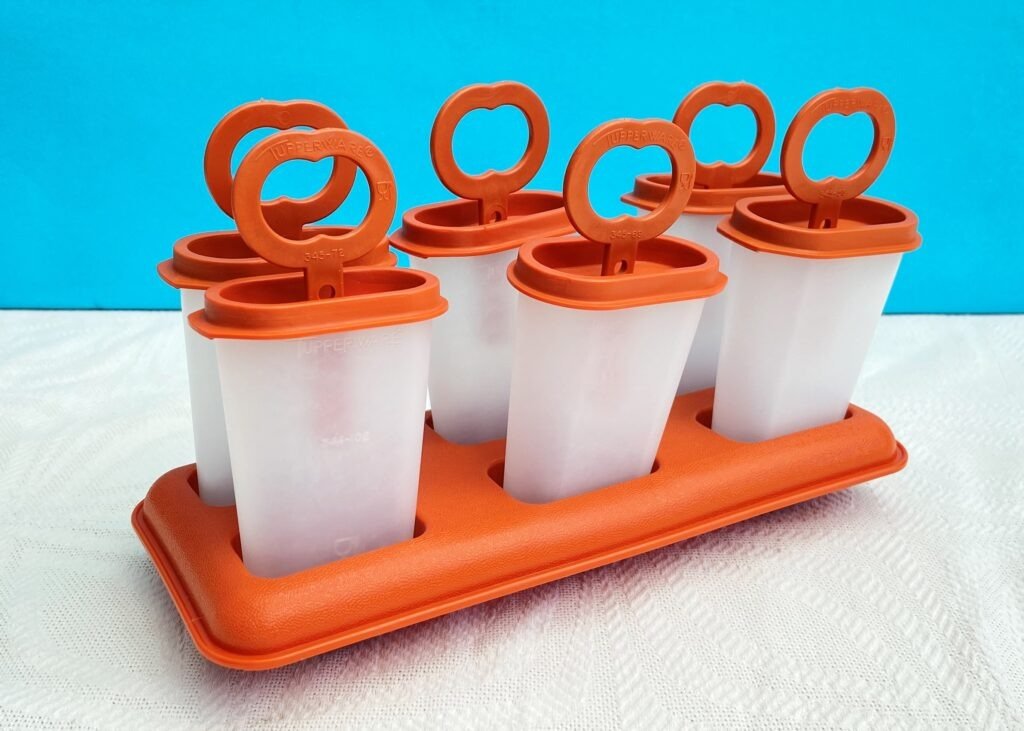
Plastic played a major role in the modern kitchen. Tupperware, already well established by the 1960s, became increasingly popular in Britain through hostess parties. The range included storage containers as well as egg cups, cheese graters, ice-lolly moulds and juicers. Pastel colours remained popular, with brighter oranges and yellows appearing later in the decade. Melamine was widely used for trays and chopping boards because it was durable and easy to clean. Other plastics appeared in mixing bowls, utensils, bread bins and cleaning equipment.

Tupperware Ice Lolly Moulds
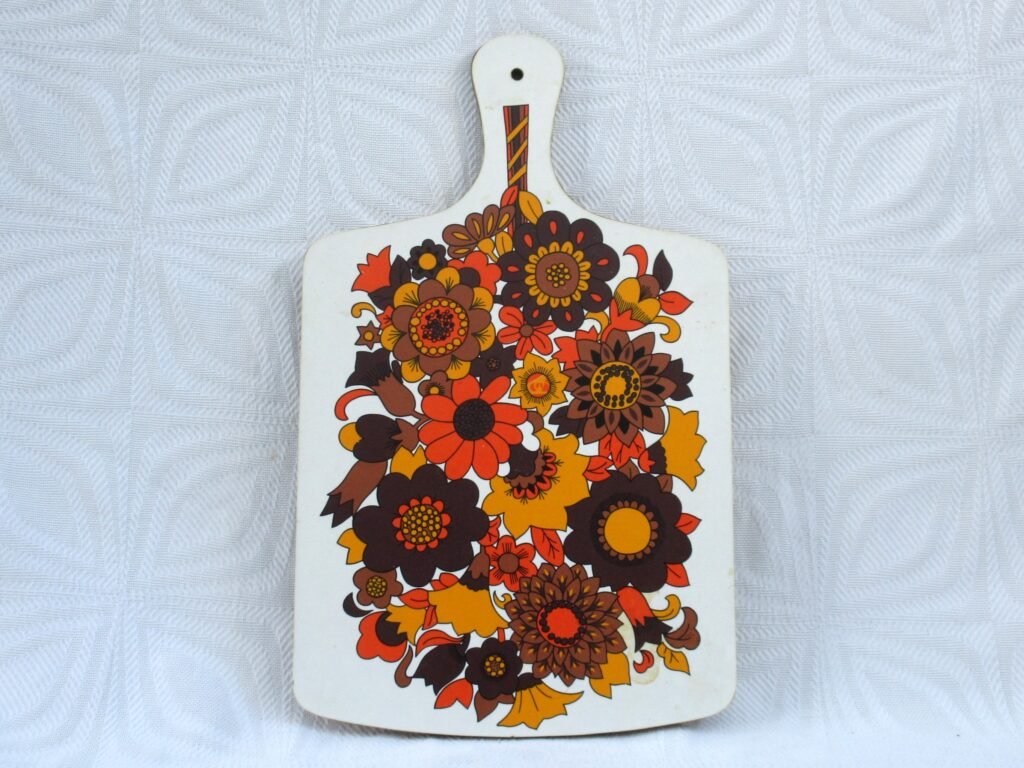
Vintage Orange Flower Power Chopping Board Melamine M&S Marks Spencer 1970s
Melamine Chopping Board Produced by Marks & Spencer

New pots and pans were made from lighter materials than earlier enamelware, although enamel continued in updated designs such as Cathrineholm and Le Creuset. Stainless steel also became popular for utensils, cutlery and tea or coffee sets, creating the clean mid-century modern look seen in designs by Robert Welch and Scandinavian makers. Pyrex ovenware was increasingly common, with the Chelsea pattern one of the most popular and recognisable designs of the period. It continued to be made well into the late 1970s.

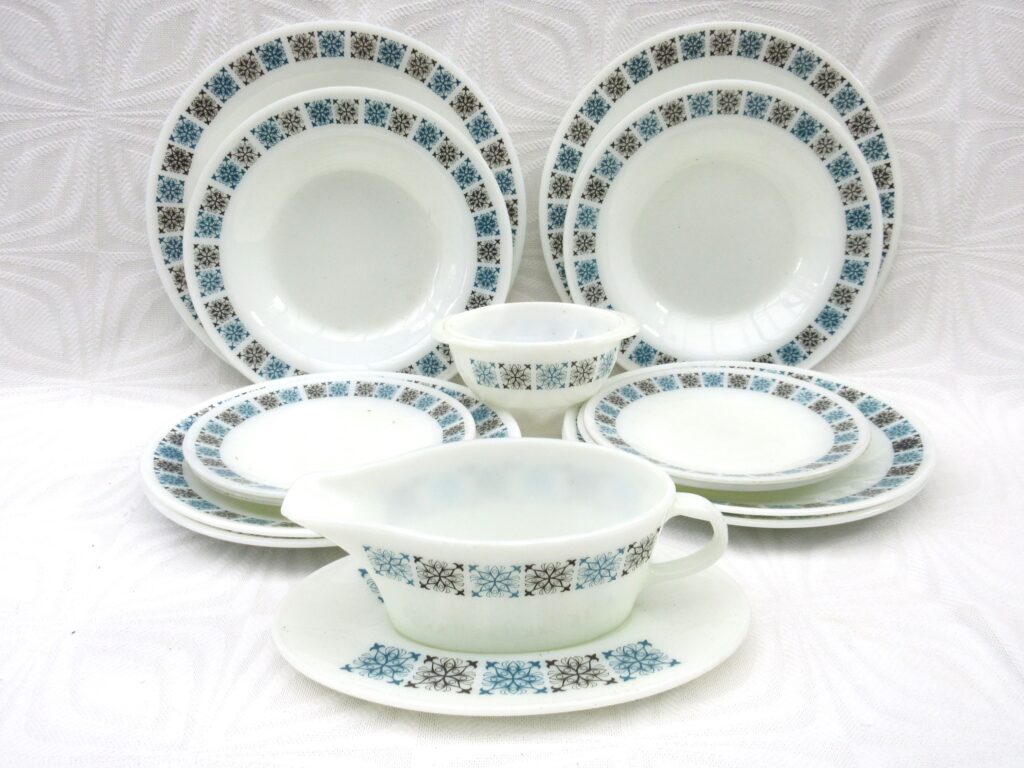
Vintage JAJ Pyrex Chelsea Pattern 60s 70s - Various Items To Choose From
Pyrex Chelsea Introduced in 1967

Despite all this innovation, the kitchen remained firmly the woman’s domain. Labour-saving devices were intended to help women manage both work and domestic duties, not to redistribute the work within the household. Women were still expected to prepare meals and act as the perfect hostess for family gatherings and dinner parties. This left some feeling trapped, especially those who worked, and created a strong pull between work and home life.

Oxo Ad 1960s Katie Man Appeal Image
Many food advertisements of the 1960s still focused on traditional roles

In many ways the 1960s kitchen was a symbol of a new and hopeful domestic future. Bright colours, modern materials and labour-saving appliances promised a more comfortable way of life, even if the realities of housework did not always change as much as the advertisements suggested. Today these designs still feel cheerful and optimistic, which is perhaps why they remain so popular with collectors and vintage enthusiasts.

Do you remember a kitchen like this? Or do you still have any 1960s kitchenware at home? I’d love to hear your memories in the comments.

This blog post is written by Rachel Toy, owner of Rachel’s Vintage & Retro. I am a 20th Century Vintage Blogger and Dealer writing about the vintage lifestyle, collecting, nostalgia and selling vintage. I also sell carefully curated 20th century antiques and collectables from my online vintage shop. I am happy to work with related brands on collaborations and also accept guest blogs. Find out how to work with me.

Recommended Articles

Leave a Reply

Your email address will not be published. Required fields are marked *