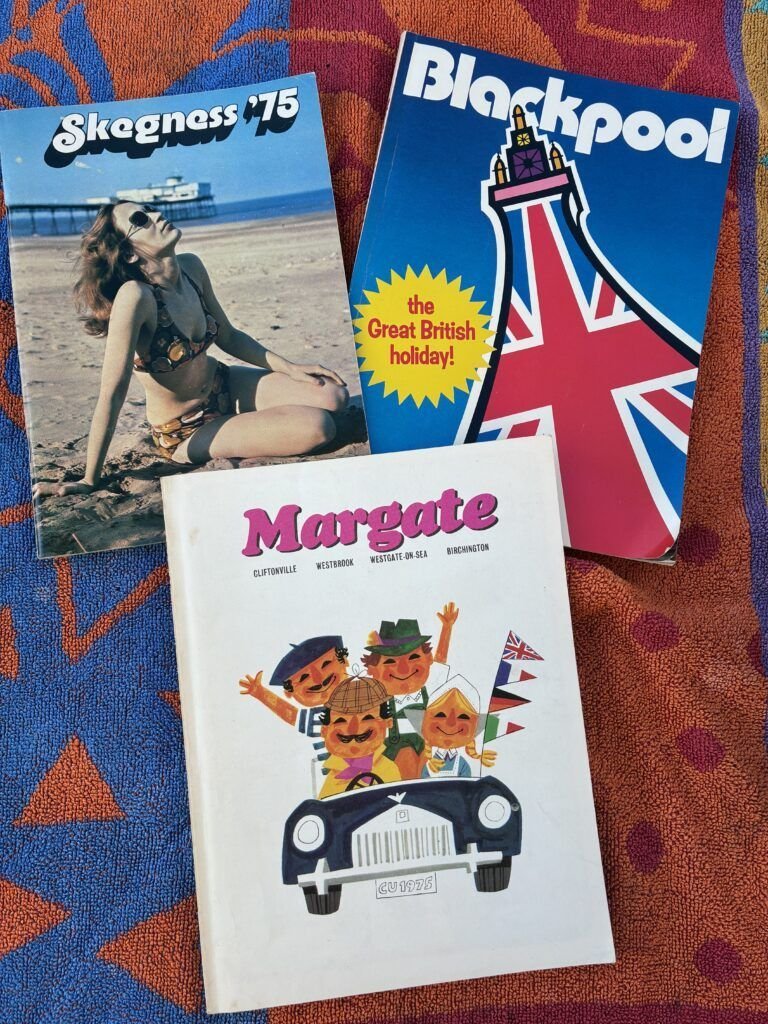
The British Seaside of the late 20th Century had a certain faded glamour. Victorian promenades, piers and grand hotels were still there, but paint was beginning to flake and rust starting to appear. Competition from holidays abroad was in full swing by then as people searched for guaranteed sunshine. But the British Seaside still stubbornly soldiered on, offering the same attractions it had for years, albeit in a slightly brashier way. It was there and it wasn’t apologising for itself.
The seaside traditions and brightly coloured aesthetic remained. You knew this was a British holiday. There was still a noisy fair on the pier, clacking amusement arcades and the smell of donuts masking the smelly toilets near the beach. Kids still played with buckets and spades and Grandad stubbornly sat on his stripy deckchair on the beach, fully suited. Handkerchiefs on the head had been replaced by Kiss Me Quick hats but the sentiment and tradition was the same. These things still remained to be enjoyed as older generations passed them on to the young.
I have put together a collection of 8 icons of the British seaside in the 70s and 80s that will bring back an instant sense of nostalgia to those who holidayed there or went for a day trip. It might not have had the guaranteed sunshine of Spain or Greece, but it was still there, and it was still to be enjoyed.
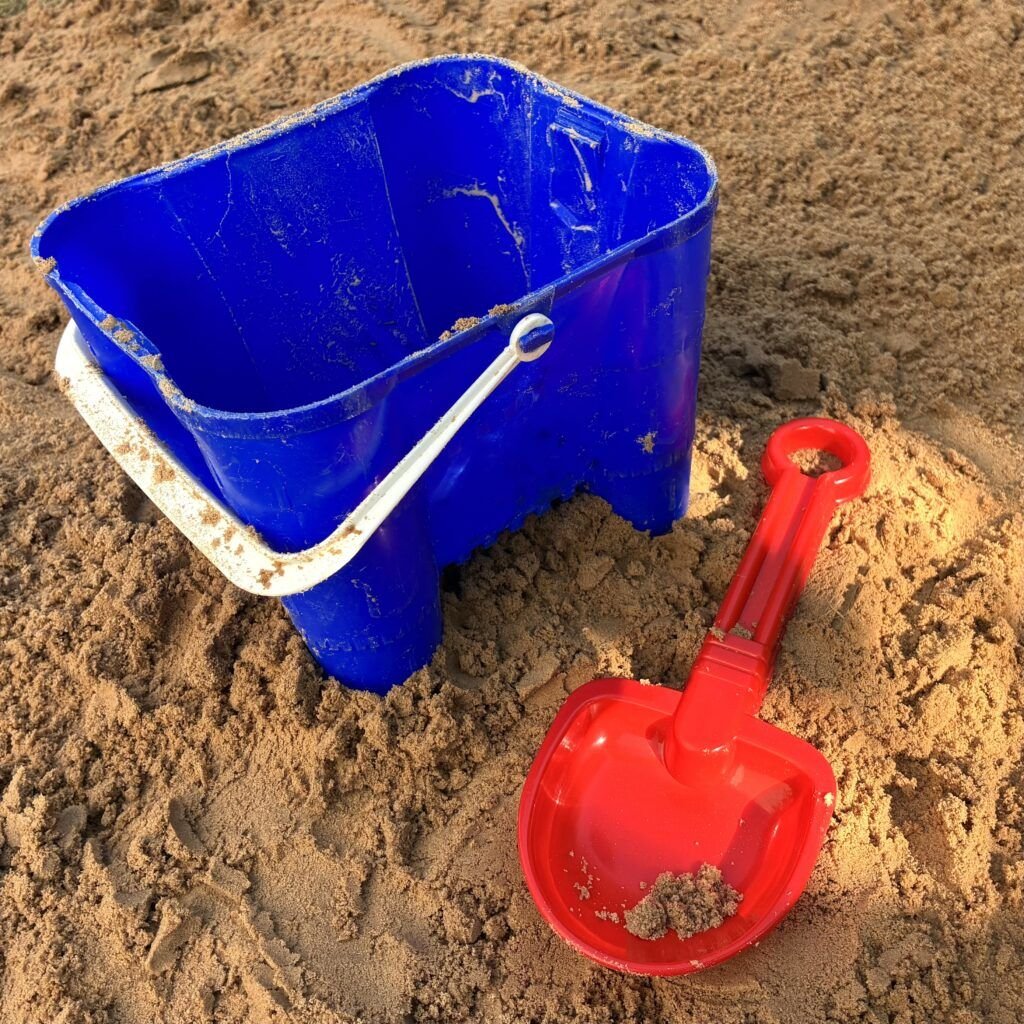
1. The Bucket and Spade
Children love building. Whether its from lego, meccano or SAND! The beach created a unique opportunity to build sandcastles, lots of them, all just with a plastic bucket and a spade to fill it with. You could build just one and kick it over, or build a whole city and put flags on them. If you were really fancy you could decorate them with shells. You had castle shaped ones, plain old bucket shape, and that was about it. A bucket and spade remains a childhood right of passage along with digging a massive hole in the beach!
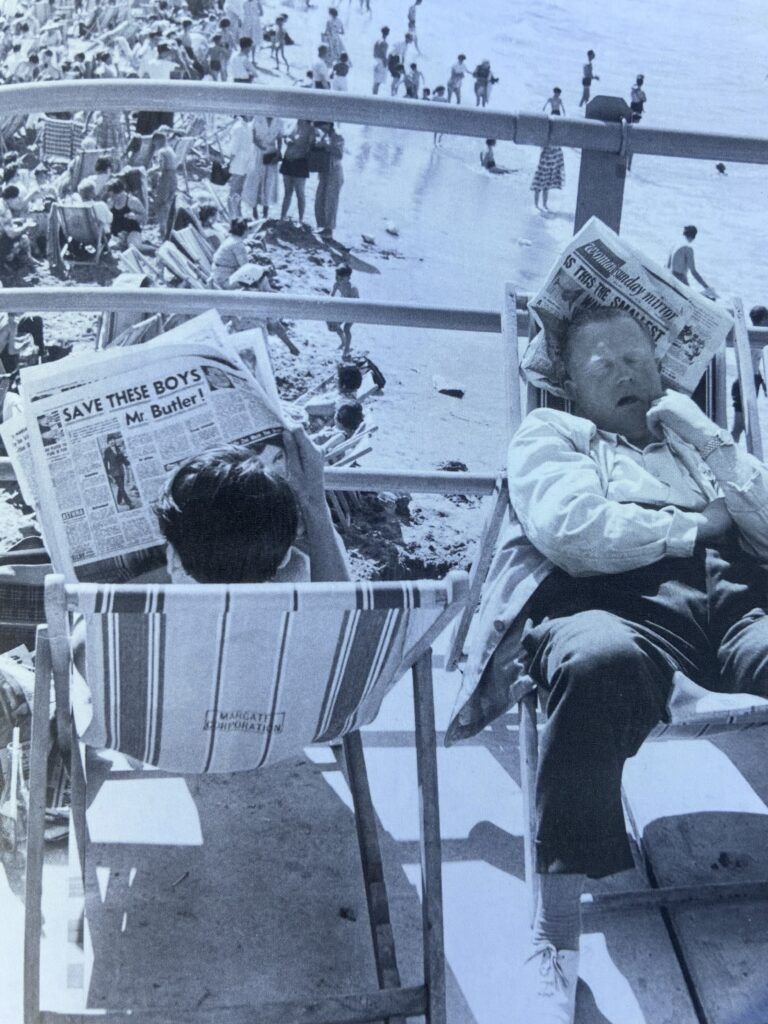
2. The Striped Deckchair
Rows of these for hire along the pier, promenade or the beach are a British institution! Made from two folding frames of wood and a jauntily striped canvas seat, they have comfortably seated many bums through the years. Formal dress used to be the norm for a day out at the seaside but by the 70s and 80s things became nore relaxed, except Grandad didn’t get the memo. You would still find that generation fully suited on the beach, maybe with their trousers rolled up and socks and shoes taken off to allow for a bit of coolness. Mum would be trying to relax and avoid sand being kicked on to the picnic she had lovingly prepared for everyone. Dad would be sitting in his budgie smugglers cooling off from a dip in the sea. Kids would be happily building sandcastles, until one of the adults fell asleep under the paper and they wanted an ice cream.
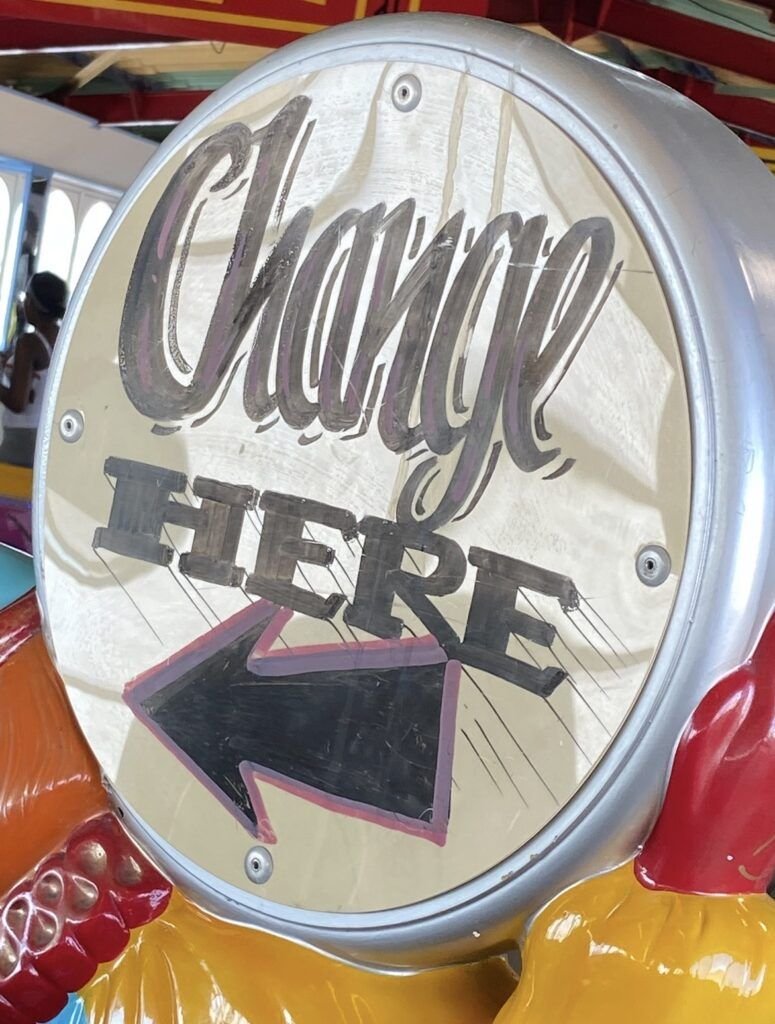
3. The Amusement Arcade
In the 70s and 80s the traditional slot machines and one-armed bandits had been replaced with electronic flashing alternatives. It was now 2p to have a go at winning … 2p! Luck never seemed to be on your side, or if it was you would put it all back in the machine again, with the promise of a winning streak. Before the video game boom of the 80s there were rows of pinball machines, immortalised by The Who’s rock opera, Tommy. By the late 70s new video games such as Pac-Man, Space Invaders and Pong started to appear and we have never looked back since. However probably the most fondly remembered arcade game was the coin waterfall. You would put your 2p in and watch as it slid from one shelf to the next, taking other coins with it (or not!). Now immortalised by TV game show Tipping Point.
4. The Saucy Postcards
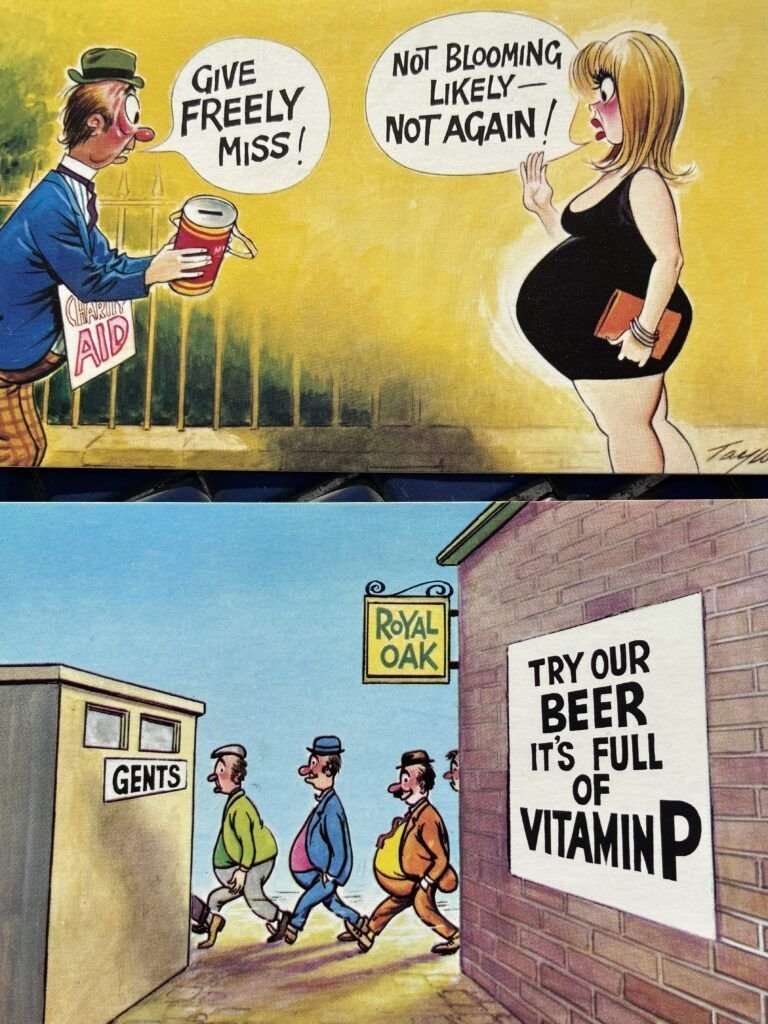
A familiar sight next to the sticks of rock and pinwheels in the seaside novelty shop were racks of postcards. There were the scenic ones, and with a turn of the rack you would soon find the saucy ones. The most famous creator of these was Donald McGill, and they featured bright and colourful cartoons with buxom blondes, rotund middle aged women and red nosed drunk husbands. The jokes were innuendo style influenced by the music halls / variety era and became synonymous with British humour for years to come. The Carry On films perhaps best demonstrate this. However, by the end of the 20th century attitudes were changing and the cards started to appear less and less. I do remember them in the 80s though and always felt I shouldn’t be looking!
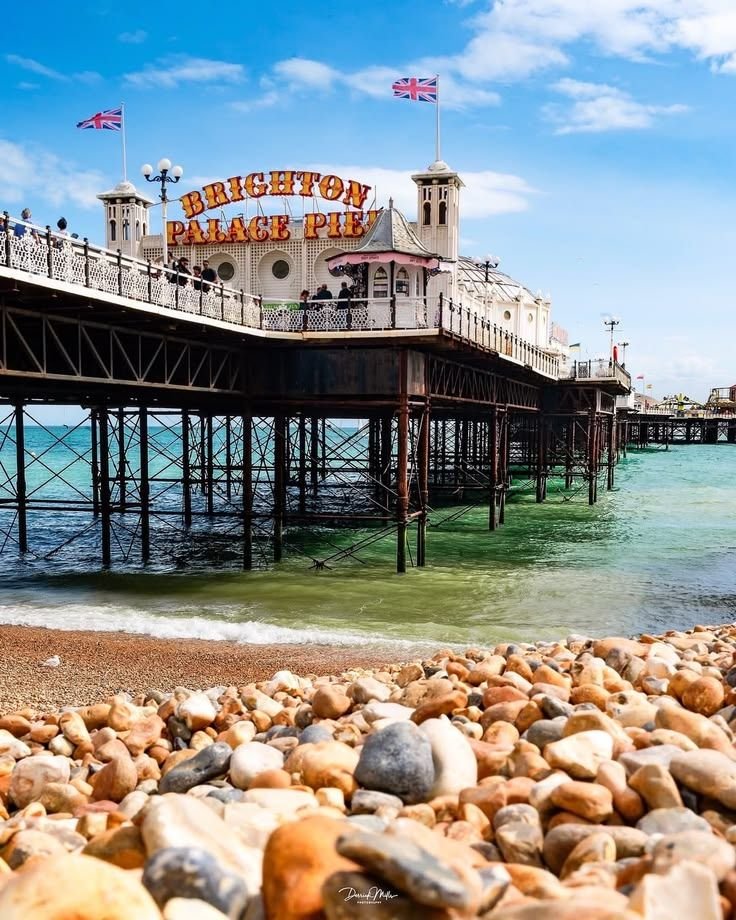
What is it about a British seaside pier that invokes such memories and excitement? These architectural platforms leading out to sea are a well-worn but familiar sight of the British seaside. Over time they have become places for entertainment with theatres, pavillions and arcades, plus the all important fun fairs with roller coaster hanging over the sea. The most memorable piers to me, growing up in the 1980s were Clacton, where you could pay a measly sum and be allowed on as many funfair rides as you liked, Southend with its mile long walkway, and Brighton’s Palace Pier which featured heavily in the 1947 film Brighton Rock (an adaptation of Graham Greene’s famous novel and starring a young Richard Attenborough). Perhaps the main attraction is that you can stroll out to sea and take in the view, without getting your feet wet!
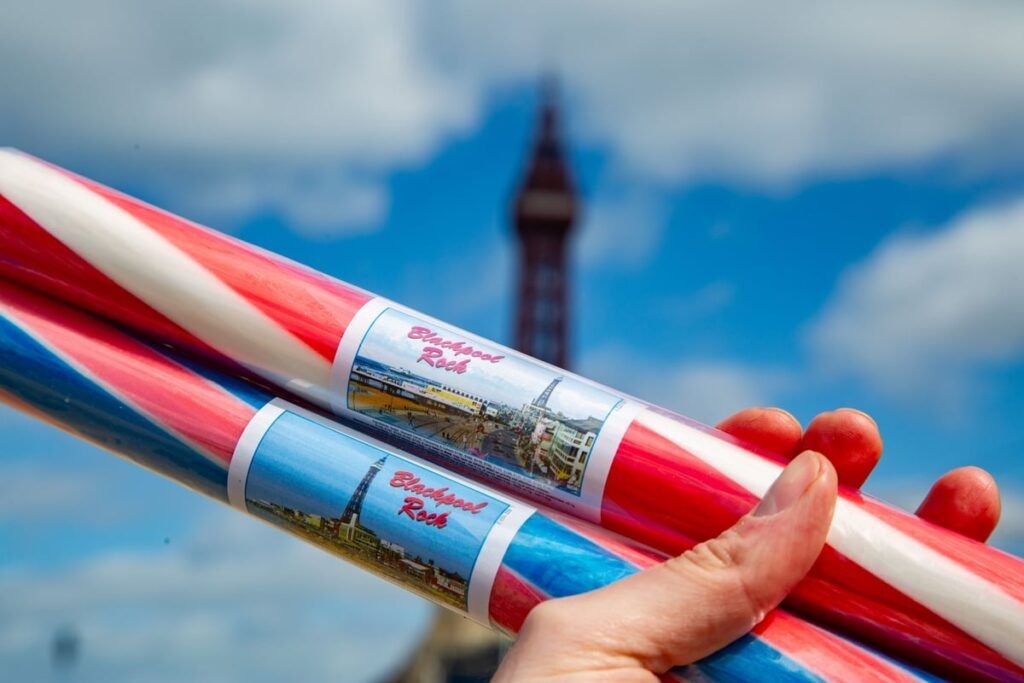
In the aforementioned film,  Brighton Rock, Ida Arnold famously said, ‘I’ve never changed. It’s like those sticks of rock. Bite one all the way down, you’ll still read Brighton’. These long sticks of hard boiled sweets are hard to forget, traditionally tasting of mint with a white centre and pink or candy striped outer colouring and nearly breaking a tooth when you bite into one. Originally sticks were sold from stalls on the beach and they were incredibly popular throughout the 20th century. I remember seeing rows and rows of them at seaside rock shops, where they would also sell other traditional sweets like sugar mice, coconut ice, nougat, peanut brittle and if you were lucky, candy floss. They made great souvenirs and no one would return from the seaside without a stick of rock or two as presents for friends and family.
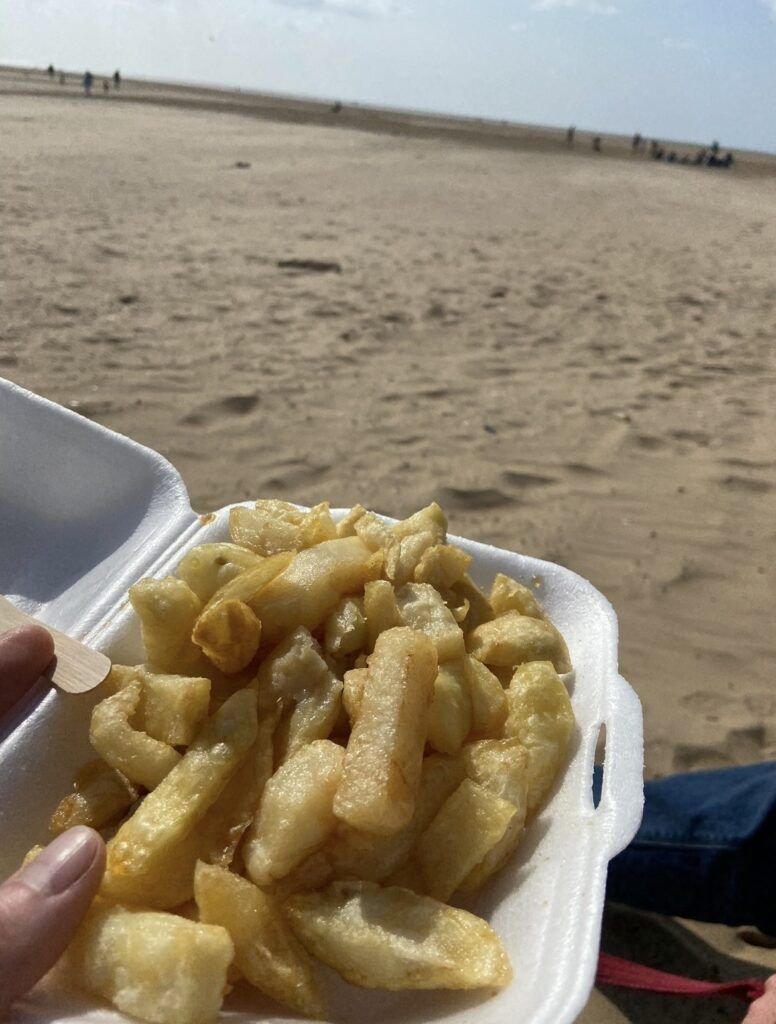
No day out at the seaside in the 70s and 80s would be complete without a hearty meal of fish and chips. In those days they were still, just about, wrapped in newspaper to soak up the grease. Although I do remember eating my chips from a newspaper style printed cone in the 80s with lots of salt and vinegar. There seemed to be something special about eating a portion at the seaside. The fish was fresher as it was mostly caught that morning, and sitting by the beach watching the waves seemed to add to the salty flavour somehow. It was a true family tradition with many going back to the same fish and chip shop for generatiions. There is one in Southend called Clarkes which has been there for years and is still run by the same family!Â
8. The Punch and Judy Show
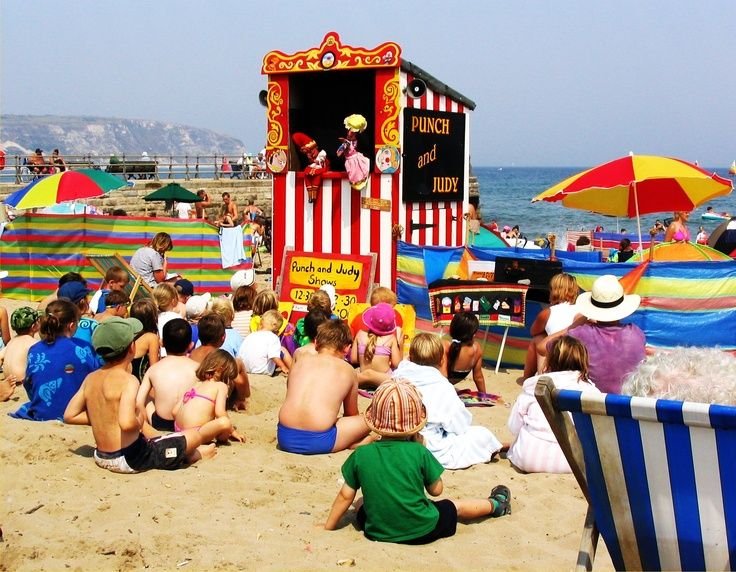
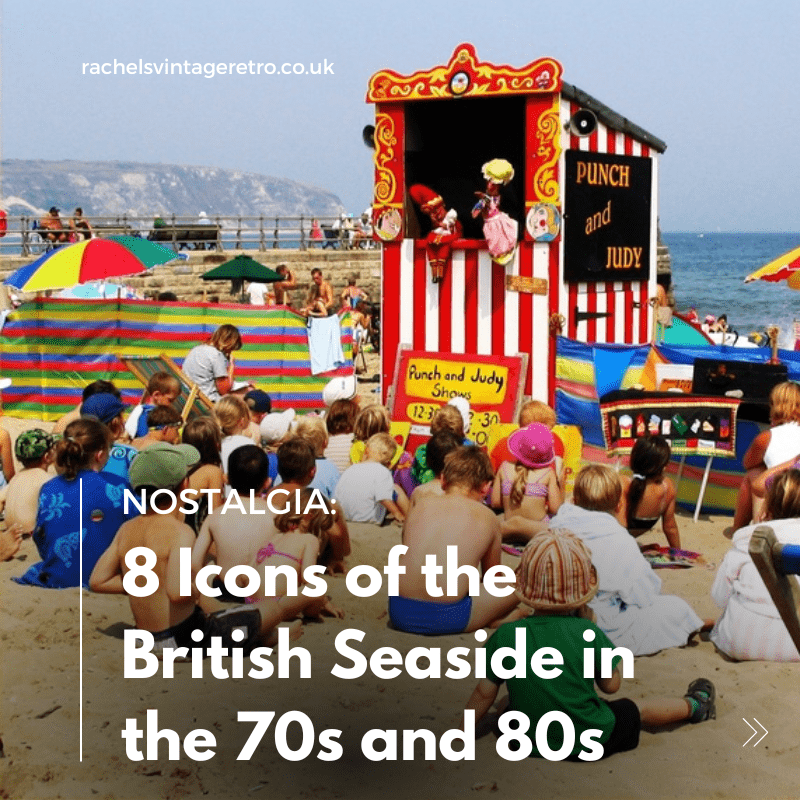
The familiar stripy tent with the anarchic puppet show was still around in the late 20th century, but things were changing. Many of the older Professors were retiring and passing on their trade to younger people in the trade. Some of them had moved to holiday camps for a guaranteed, regular income. However you could still find the odd tent or two on the beach. A small rectangular red and white affair with a stage at the top would be where the slapstick puppet show, would begin. I remember sitting cross legged on the floor waiting for the show to begin. Throughout the performance classic pantomime style shouts like ‘he’s behind you’ and ‘oh no he didn’t’ would travel for miles through the sea air and catch the parents sitting at the bar to remind them they still had children! And finally, who could forget Punch’s classic high pitched raspy voice, that went straight through you.
I am sure there are many more items you can think of that made your days out and holidays at the British seaside special. Do let me know in the comments!
This blog post is written by Rachel Toy, owner of Rachel’s Vintage & Retro. I am a 20th Century Vintage Blogger and Dealer writing about the vintage lifestyle, collecting, nostalgia and selling vintage. I also sell carefully curated 20th century antiques and collectables from my online vintage shop. I am happy to work with related brands on collaborations and also accept guest blogs. Find out how to work with me.