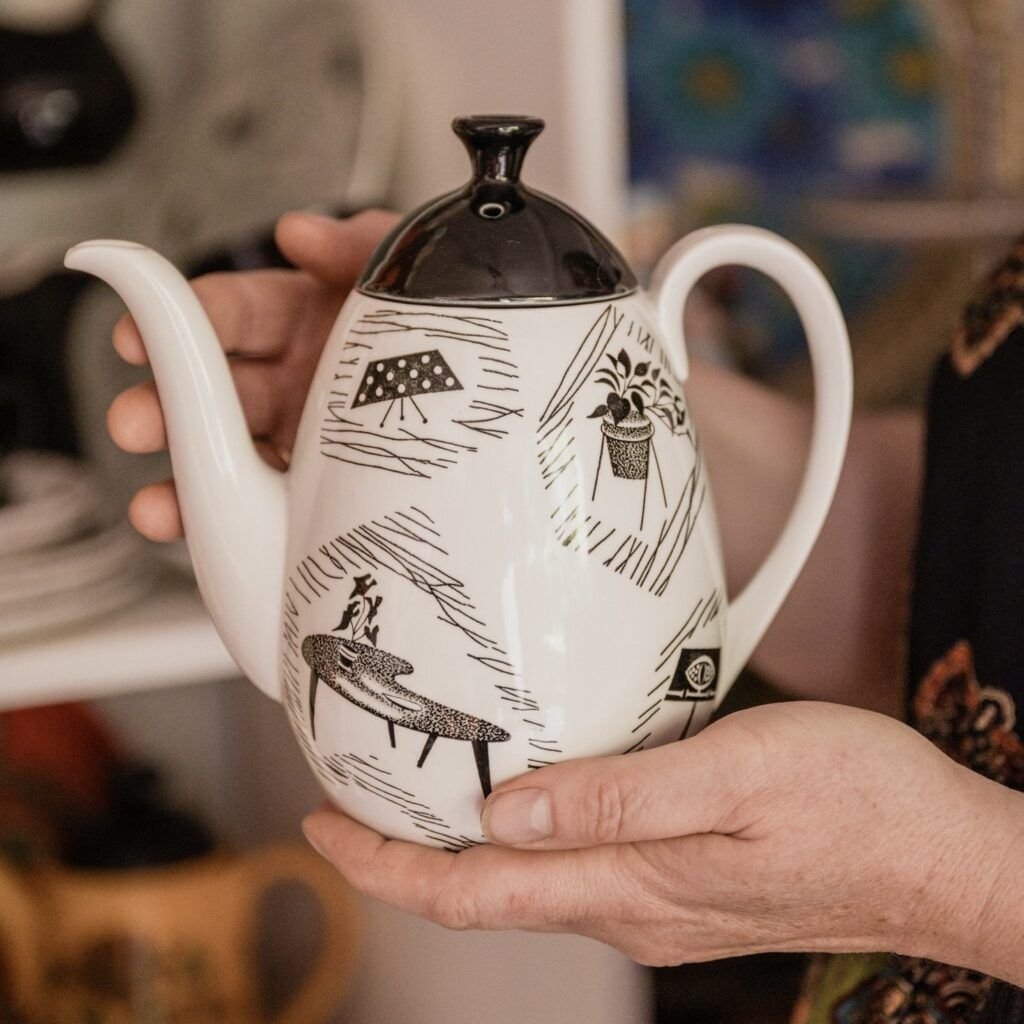
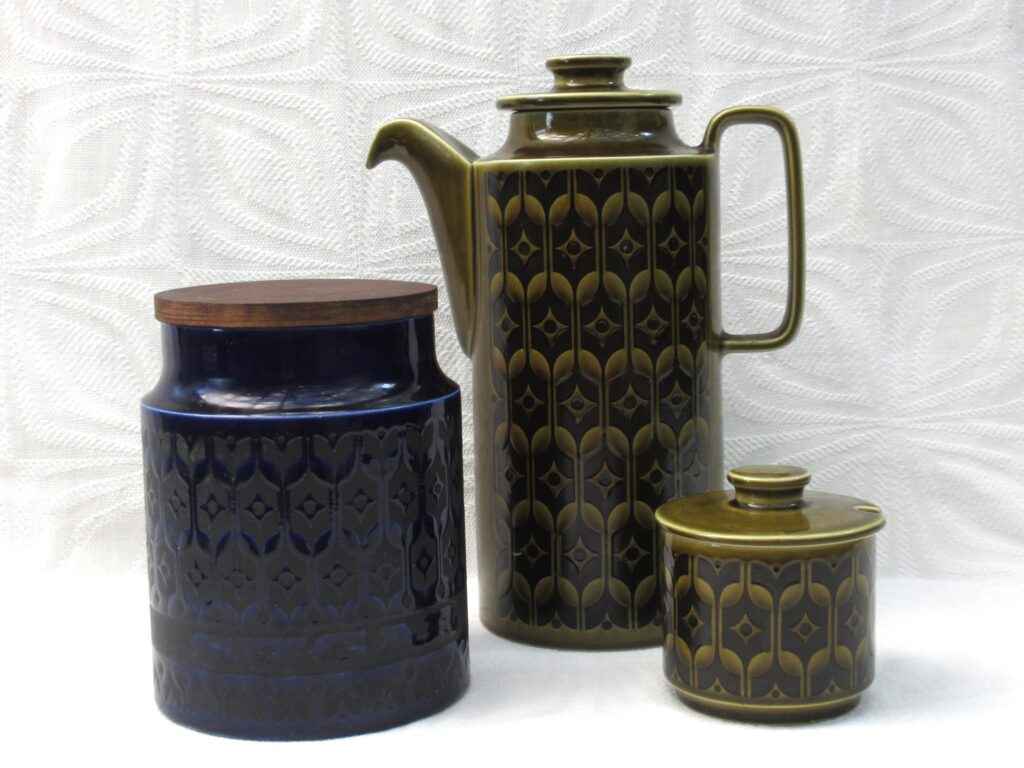
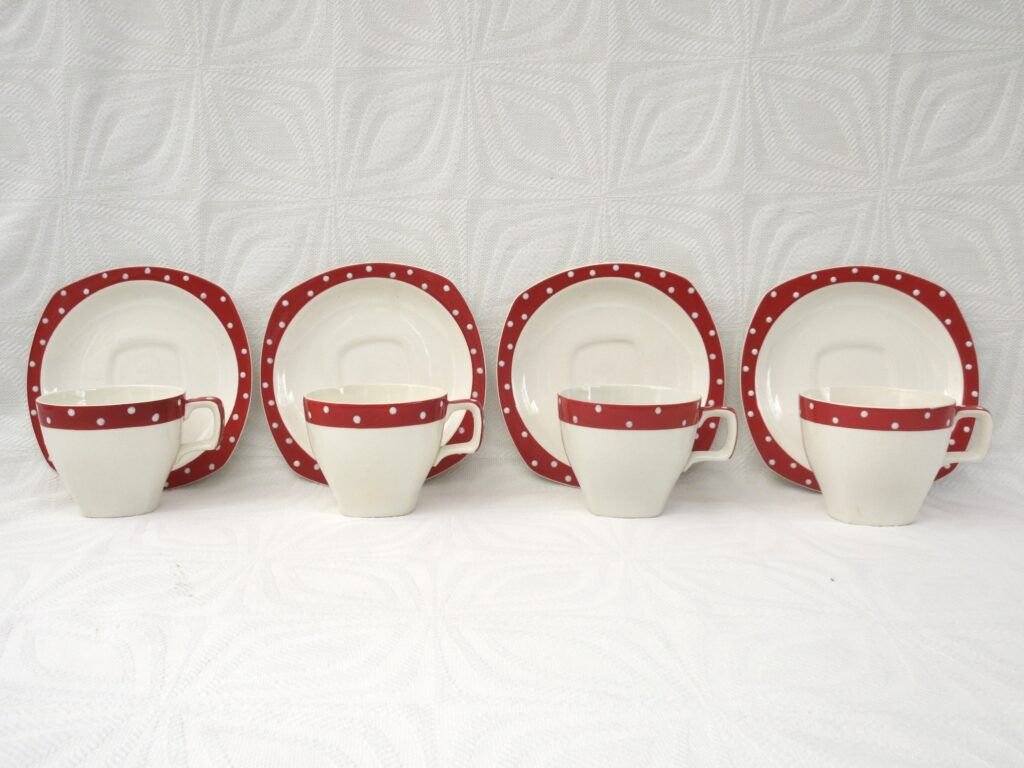
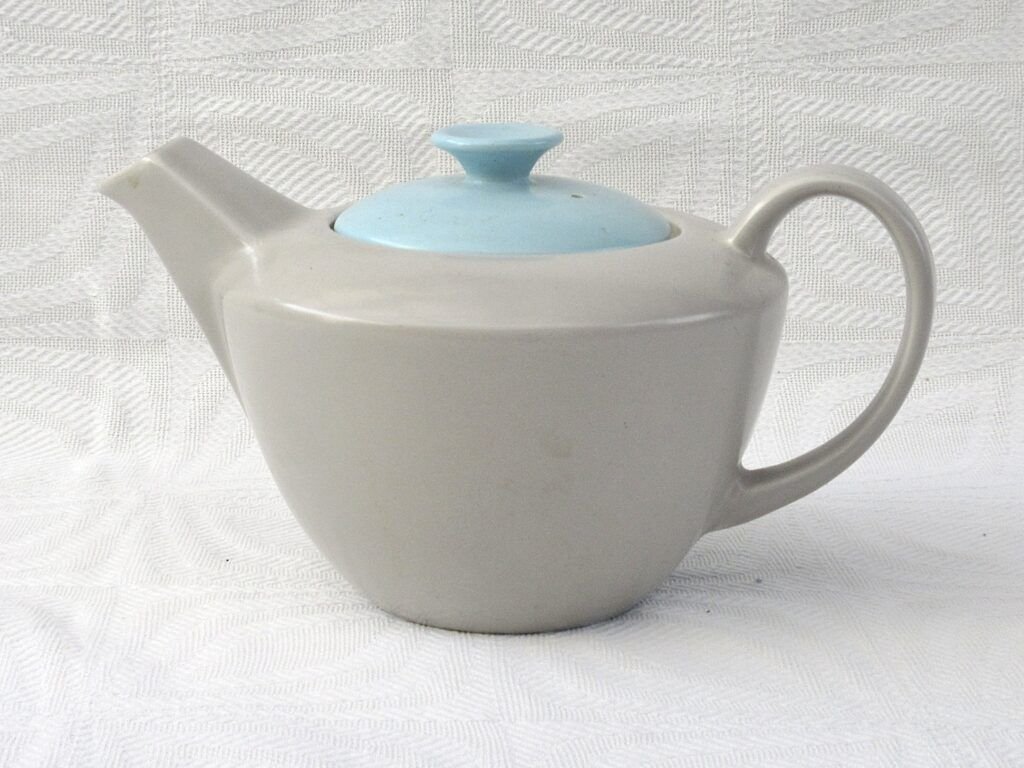
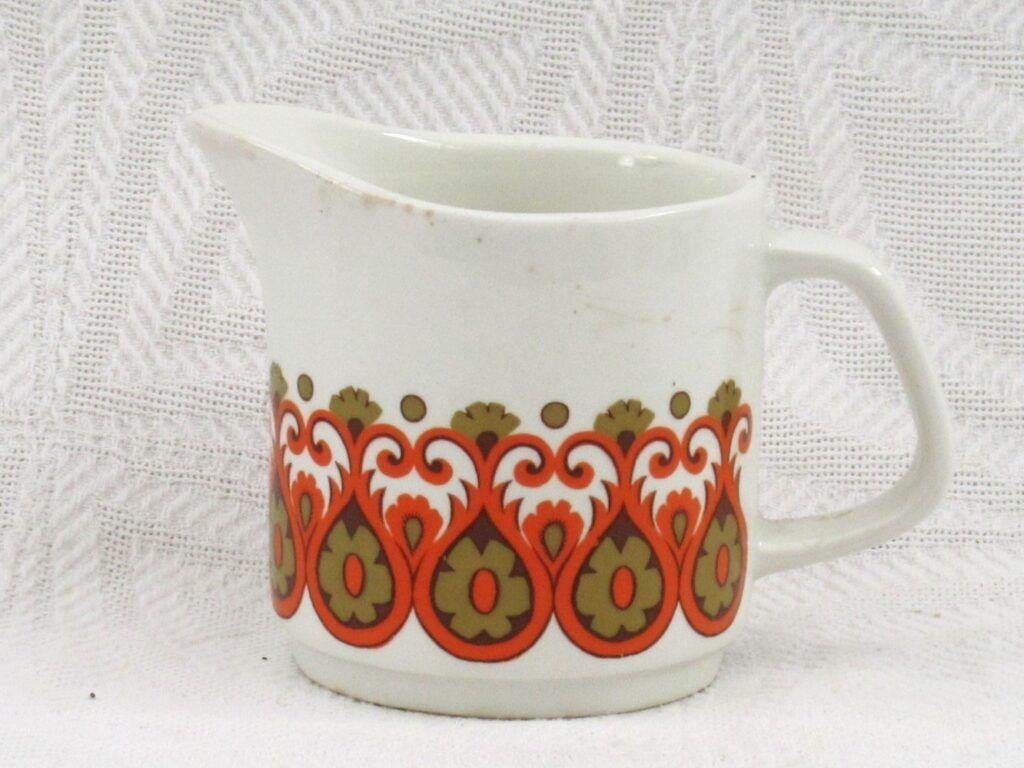
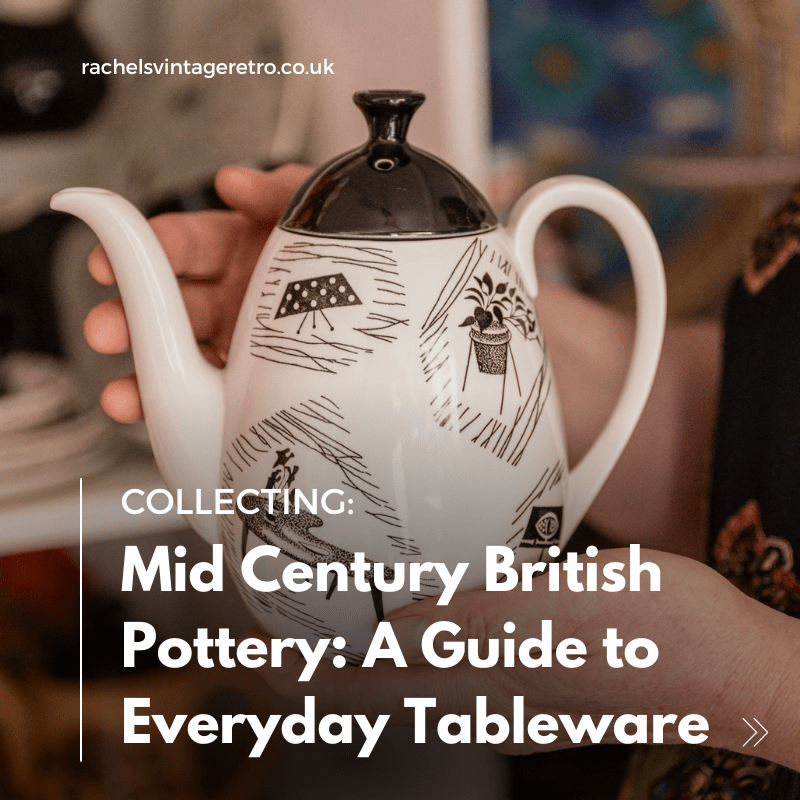
Pouring yourself a cup of tea from a brightly coloured organic shaped teapot was part of everyday life in the 1950s. The cup and saucer would be from a matching set and feature abstract motifs inspired by the times, such as the ‘Space Age’ and Dior’s ‘New Look’. It was innovative and modern and after the austerity of the Second World War, a welcome sight in kitchens across the country.
Britain at this time wanted to move forward and money was invested into innovation. Consumers were keen for change and to accommodate this, manufacturers employed younger designers to create something genuinely new. This talent was very much on display at the Festival of Britain in 1951 and inspired a new generation of homemakers in how to create a modern home.
Design Influences and Product Innovations
In the 1950s, traditional British pottery manufacturers looked to the streamlined shape of American tableware as well as a Scandinavian minimalist style. Young designers were tasked with creating products that deliberately left the past behind. Surface designs were more conceptual and looked to the future with inspiration from foreign travel, the Atomic age and nature. They could easily be repeated, coinciding with more efficient ways of decorating the pottery for mass production. Now designs were directly litho-printed onto ceramics, instead of the traditional hand painted way of working. Everyday tableware could suddenly be mass produced quickly and cheaply.
Post-war optimism continued into the 1960s and in terms of tablewares, things were becoming even brighter, colourful and organic. Reflecting the freedom of the hippie movement, this meant large flower power or psychedelic patterns in clashing colours. Also inspired by Pop Art, some manufacturers used ironic designs taken from mass commercialism and culture. In the meantime, shapes for tableware became more exaggerated with long cylindrical coffee pots and geometric forms. Factories developed other textured finishes also that reflected the influence of Scandinavian natural forms.
In the 1970s, this sense of renewal was on the wane due to tougher economic times. Movements like self sufficiency and concern for the environment saw a rise in more earthy designs and rustic forms. Colours became muted with homely greens, browns and oranges. New earthenware pottery was introduced and felt more robust on the table, a comforting anchor for uncertain times. Designers took inspiration from nature, as well as global cultural influences along with a humorous look at life. At this time novelty kitchenware also appeared, such as storage jars with funny faces and egg cups with legs.
Key British Pottery Makers
These trends were brought alive by a number of influential British potteries and designers. Many of them were traditional factories, around since the industrial revolution. However, they needed to adapt if they were going to stay relevant in mid-century Britain. Each developed their own unique style and production techniques, going on to produce some of the most inspiring pottery of their day. It is no wonder then that they are still highly collectable by vintage enthusiasts. Below is a guide to the key makers, what defines their style and what to consider when building your own collection.
Founded in 1949 by brothers Desmond and Colin Rawson at their home in Hornsea, Yorkshire. Hornsea Pottery initially made novelty ornaments, table accessories and vases but moved into full tableware production in the late 1960s. John Clappison was a key designer, along with Marion Campbell and Alan Luckham.
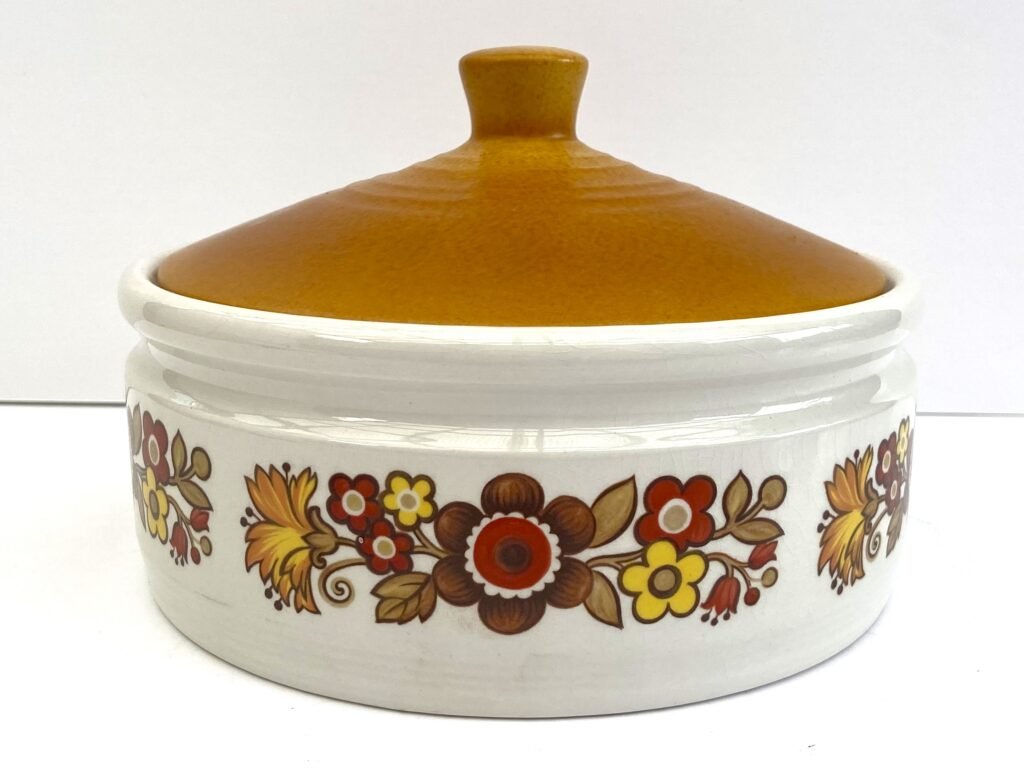
Earlier designs by Clappison included the Elegance tableware accessories in modern slipware which captured the mood of the time. The 1960s saw the introduction of the Studio Craft range, popular for their creamy glaze and op art patterns. In the late 1960s and 70s, he designed the earthier toned storage containers and matching tableware which used a resistance glazing technique. This created a unique textured style. Most popular were the Heirloom, Brontë and Saffron ranges.
Hornsea is enduringly popular with collectors. Original mugs by John Clappison can fetch upwards of £20. The storage containers remain a staple of any collection and are still useable and affordable at £8 – £25 each. Earlier 1960s pieces are hard to find which makes them highly desirable, so are a good place to start if you want a higher value collection.
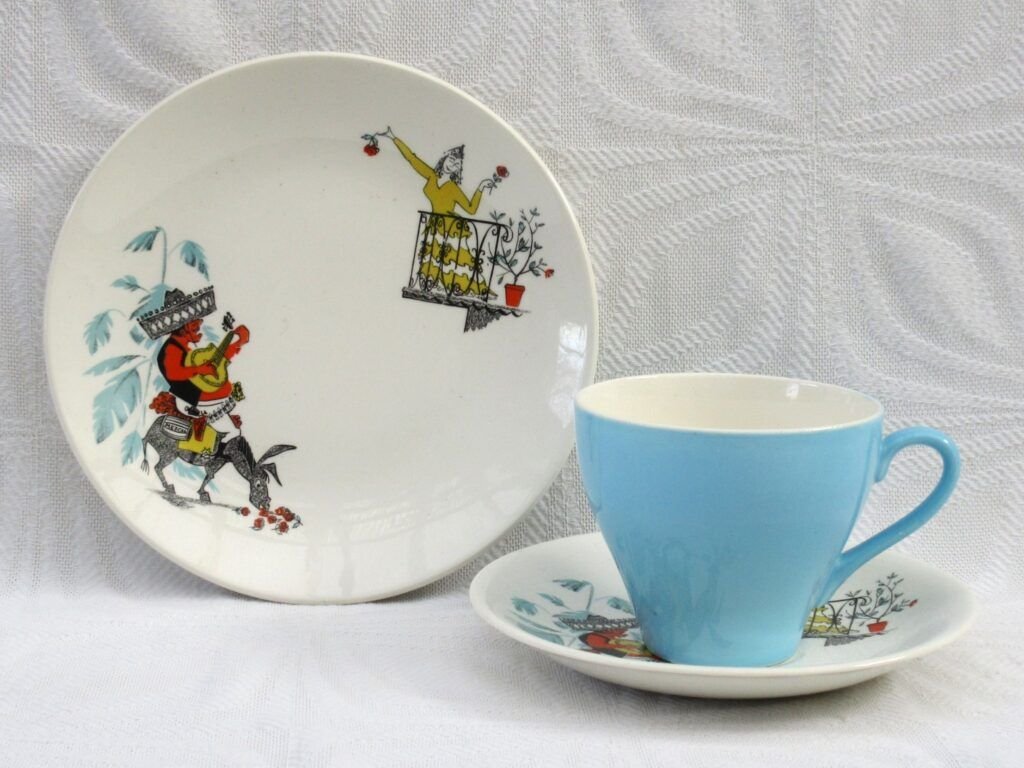
One of the original potteries in Stoke-on-Trent, Midwinter was founded in 1910. However it took off after the Second World War when Roy Midwinter, son of the founder became design director. He drew on talent such as Hugh Casson, Terence Conran and in-house designer Jessie Tait. Designs included those depicting Mediterranean scenes, nature inspired abstracts, cheerful polka dots and animal prints.
They introduced two innovative modern shapes for their tableware in the 1950s, Stylecraft and Fashion. Stylecraft was more cube shaped and hand painted, whilst Fashion had flowing lines with a rimless plate design. In the 1960s and 1970s, Fine-shaped tableware was launched. It used a straight sided cylinder shape which made it easier to apply vertical designs such as Sienna.
If you are looking to start a Midwinter collection. prices are still affordable and pieces can be picked up relatively easily at car boot sales etc. Look for Sienna, Kismet and Spanish Garden in the Fine shape. The popular 1950s designs such as Red Domino and Zambesi are slightly harder to source but can still be obtained at a reasonable price. Rarer to find are the 1950s and early 1960s pieces, so you will pay more. Sets with charming scenes on by Hugh Casson, such as Riviera and Cannes are especially sought after. Primavera, a textile based design by Jessie Tait is showing increased prices in the collectors market, along with Chequers by Terence Conran.
Formerly known as Carter, Stabler & Adams, Poole Pottery made their own range of decorative pottery from the 1920s. Stylised floral designs of the 1930s were popular, along with now sought-after Jazz Age abstract patterns by Truda Adams.
During the 1930s the ‘Streamline’ tableware range was introduced. It was a modernist design in cream and brown. Later the shape was used for Twintone range in the 1950s, 1960s and 1970s. Its pastel interior colours with speckled grey glaze outer was very popular and still looked out for by collectors today.
In terms of everyday tableware, when Robert Jefferson took over as resident designer at Poole, his Lucullus oven to tableware range brought in a new print design process with better reproduction across the range. Some of the designs are extremely stylish and are very much sought after today.
The famous dolphin motif base mark was used from the early 1950s through to the 1970s. This should help you date some pieces.
For a collection of Poole tableware, pieces from the Twintone and Lucullus range are an excellent starting point. Prices vary from as low as £6 for a Twintone jug to £20-30 for Lucullus tureens and coffee pots. Rarer pieces will command more.
Established Stoke-on-Trent 1851, by the 1950s J&G Meakin had begun to produce modern tableware.
However it wasn’t until in 1964 when the Studio shape, designed by Tom Arnold, was introduced that it became successful.
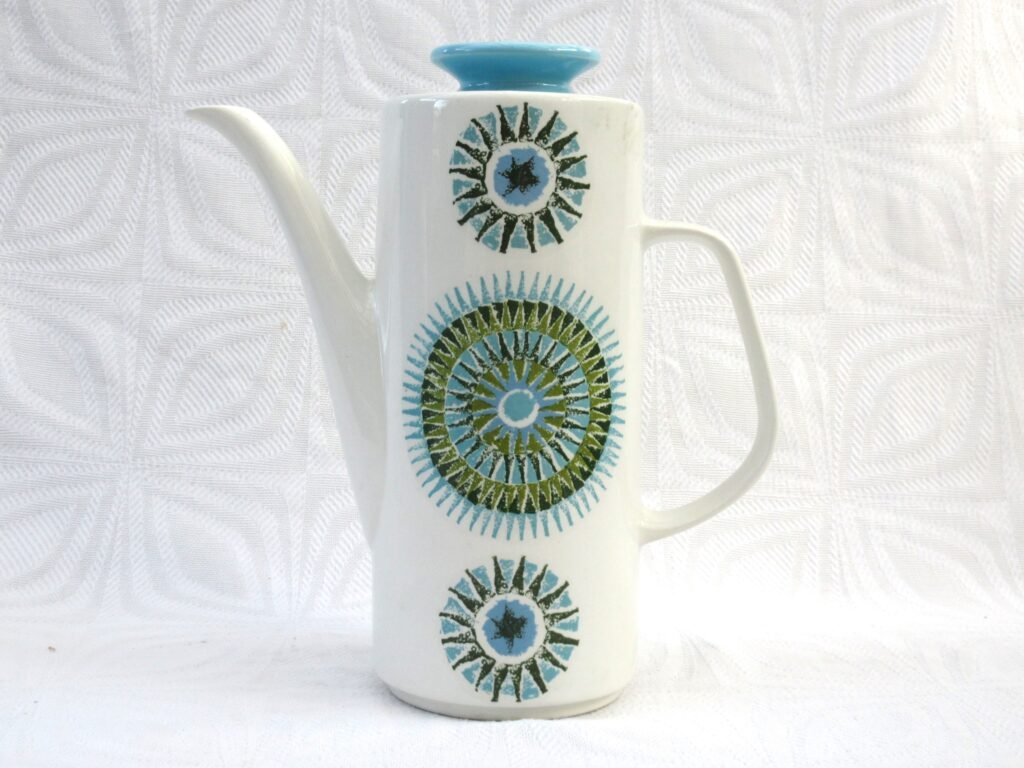
The tall cylindrical form of the coffee pot echoed that of David Queensberry’s Fine range for Midwinter, amongst others around at the time. The tableware range contained fashionable graphics in a range of designs.
In 1968 they took over Midwinter and gained Jessie Tait, a popular pottery designer of her day. ‘Manderley’ was her first design for the Studio range.
Other designs by Tait include Impact and Inca. Aztec was designed by Alan Rogers and had striking turquoise motifs inspired by ancient cultures.
Coffee pots and milk jugs are very popular amongst collectors today. It is custom to collect most, if not all of them and they make a great display.
Expect to pay £6-£8 for a milk jug and £15-25 for coffee pots. The harder to find designs such as Garden Party by Jessie Tait command higher prices.
Other British Pottery Tableware Makers
- Ridgway Potteries – known for their Homemaker range
- Lord Nelson Pottery
- Sadler
- TG Green
- Woods
- Portmeirion
- Denby Pottery
- Broadhurst and Kathie Winkle
This blog post is written by Rachel Toy, owner of Rachel’s Vintage & Retro. I am a 20th Century Vintage Blogger and Dealer writing about the vintage lifestyle, collecting, nostalgia and selling vintage. I also sell carefully curated 20th century antiques and collectables from my online vintage shop. I am happy to work with related brands on collaborations and also accept guest blogs. Find out how to work with me.